Bedding • Fabric care
Coyuchi Sheets: Understanding Fiber, Weave, and Everyday Care
A sheet is a small landscape of fibers and crossings. Its feel at bedtime—and its condition after years of washing—depends on what those fibers are, how they are woven, and how gently the fabric is treated. Understanding those details makes it easier to compare Coyuchi sheets and care for the set you bring home.
At first touch, sheets may seem simple: a flat surface between the sleeper and the mattress. But cloth is a working material. It must bend and breathe, absorb moisture, withstand repeated friction, and survive the steady cycle of washing and drying. Fiber, yarn, weave, finishing, and care all contribute to the experience.
That is why a label or product description can tell a more useful story than a single number. Fiber identifies the raw material. Weave describes how the yarns cross. Finishing affects the hand—the way cloth feels against the skin—and care instructions explain how to maintain the fabric without placing unnecessary stress on it. When comparing Coyuchi sheets, these are practical places to begin, whether you are choosing cotton, linen, or another construction.
No one material is best for every sleeper or household. A warm bedroom, a cool climate, frequent laundering, skin sensitivities, and personal preference all change what “comfortable” means. The aim is not to chase a universal ideal, but to understand what a sheet is made to do and how to help it last.
Begin with the fiber
Fibers are the building blocks of fabric. Their length, strength, surface, and response to water influence how a sheet feels and performs. Product descriptions may identify the fiber by name—such as cotton or linen—or add information about its origin, processing, or certification. Those details are useful, but they answer different questions: fiber content describes the material, while a certification or origin statement concerns particular sourcing or production claims.
Cotton: familiar, adaptable, and varied
Cotton is widely used in bedding because it can be spun and woven in many ways. A cotton sheet may feel crisp, smooth, soft, or textured depending on the yarn, weave, finishing, and subsequent care. The word “cotton” alone therefore does not specify how a particular sheet will feel.
Descriptions may include details about cotton type, fiber length, or organic certification. These can help distinguish one product from another, but they should be read alongside construction and care information. A smooth finish, for example, is not a guarantee that every cotton sheet will feel identical: weave density, yarn quality, and laundering all matter.
Linen: a distinctive texture and an easygoing drape
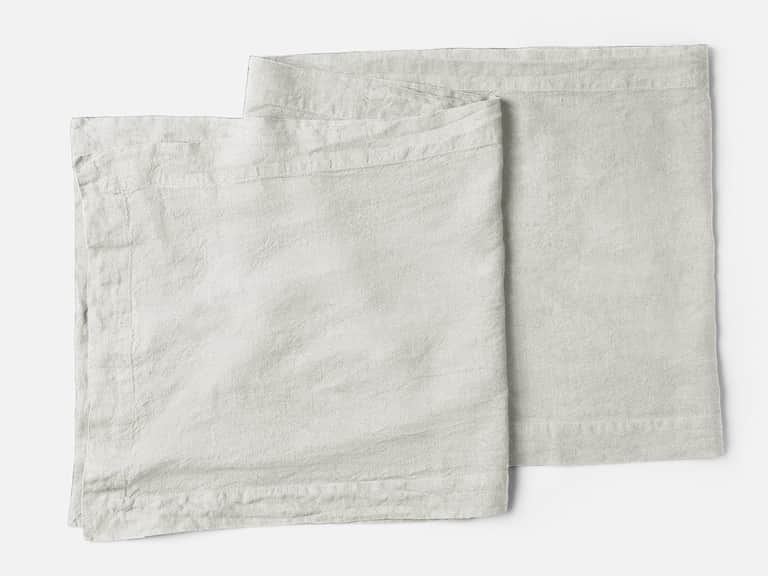
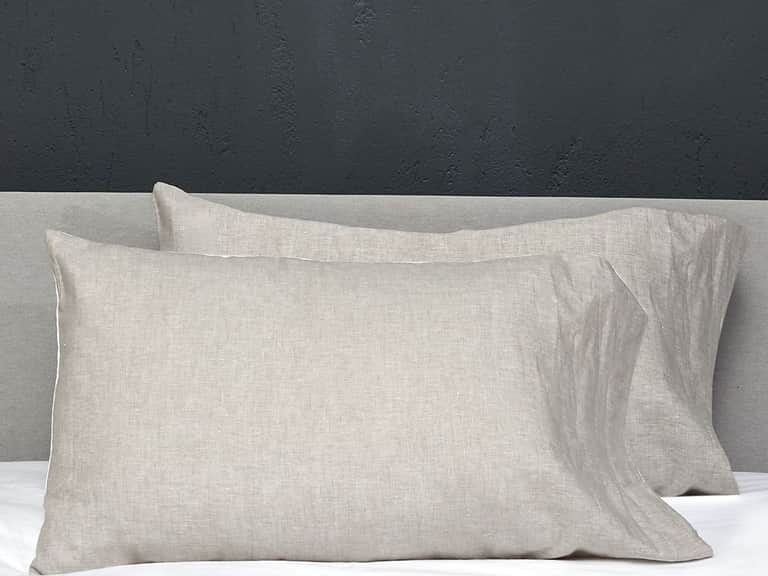
Linen is made from flax. Its characteristic texture is often more visibly irregular than that of finely finished cotton, and the cloth can feel dry, airy, or gently textured at first. Many linen fabrics relax with use and washing, developing a softer hand over time. The amount and pace of that change depend on construction and finishing, so it is sensible to consult the specific care label rather than assume all linen behaves alike.
People often choose linen for its relaxed appearance and its capacity to move air and manage moisture in everyday use. Yet “breathable” does not mean that every linen sheet feels cool to every person in every room. Mattress, duvet, room temperature, and individual sleep preferences combine to shape the experience. Linen can also wrinkle readily; for some households, that softened, lived-in look is part of its appeal, while others prefer a smoother finish.
Blends and finishing details
Some bedding combines fibers to balance qualities such as softness, strength, cost, or ease of care. A blend should be judged by its stated composition, not by broad assumptions about one component. The percentage of each fiber matters, as does the way the yarns are spun and the cloth is finished.
Finishing can change the first impression of a sheet. A fabric may be washed, brushed, or otherwise treated to alter its softness, surface, or appearance before it reaches the bed. Such treatments do not replace good construction, and an especially soft first touch is not by itself a measure of durability. Consider the label, construction details, and care instructions together.
What weave tells you
Weave is the arrangement of lengthwise and crosswise yarns. Two sheets made from the same fiber can feel strikingly different because their yarns cross in different patterns or at different densities. Weave affects surface character, drape, weight, airflow, and the way a fabric responds to wear.
Percale: a crisp, plain-weave character
Percale generally refers to a plain weave with a closely balanced crossing of yarns. It is often associated with a crisp, matte surface and a light, clean feel. Some sleepers like the sensation of freshly laundered cloth; others prefer a smoother or more supple hand. Percale’s character is not determined by weave alone: fiber quality, yarn construction, and finishing remain part of the picture.
Sateen: a smoother surface
Sateen uses a weave structure that places more yarn floats along the fabric surface. This can create a smoother, often subtly lustrous feel and a more flowing drape. The same surface characteristics may make friction and snagging considerations more noticeable, depending on the cloth. Sateen is not simply “better” or “worse” than percale; it is a different texture, suited to different preferences.
Linen constructions and textured weaves
Linen sheets may be described by their weight, weave, or finishing rather than by a familiar bedding label such as percale or sateen. A looser construction can create a more open, relaxed appearance, while a denser cloth may feel more substantial. These terms are not interchangeable, and descriptions can vary across makers. If a product page provides a weight or weave detail, use it as one clue—not a standalone prediction of comfort.
Thread count also needs context. It counts yarns in a defined area, but it does not tell the whole story about fiber quality, yarn size, or weave. A very high number is not automatically a sign of superior bedding, and comparing thread counts across different fiber types or constructions can be misleading. Fiber, weave, finish, and feel together offer a more complete picture.
Reading a sheet description with care
Product language is most useful when you translate it into questions you can answer. Instead of relying on a single adjective such as “luxurious,” look for concrete information: the fiber composition, whether the sheet is a flat sheet or fitted sheet, the dimensions, the depth of a fitted pocket, the construction, and the recommended care.
- Fiber content: Is the fabric cotton, linen, or a blend? Are percentages stated?
- Construction: Does the description name a weave or explain how the fabric is finished?
- Fit: Do the sheet dimensions and pocket depth suit the mattress, including any topper?
- Care: Are water temperature, cycle, detergent, and drying guidance provided?
- Claims and certifications: Is a certification named clearly, and what specific claim does it support?
Brand names can help identify a maker, but they do not replace the product’s own specifications. Even sheets from one brand may differ in fiber, weave, finish, color treatment, or care requirements. Check the current product description and the sewn-in care label for the particular set rather than transferring instructions from another item.
For Coyuchi sheets, the same method applies: begin with the stated fiber and construction, then consider the kind of surface you enjoy and whether the care routine suits your household. If a detail is absent or unclear, it is better to seek clarification than to guess based on a similar-looking sheet.
Care labels are a map, not an afterthought
Every wash subjects fabric to movement, water, detergent, and changing temperatures. Drying adds heat and tumbling. Over time, these forces can affect color, softness, shape, and strength. A care label helps set limits for that particular textile, accounting for fiber and finish. Follow the instructions attached to your sheets first; general guidance should never override the maker’s label.
Before the first wash
Check the label before putting new sheets in the machine. Separate colors when needed, especially when laundering dark or saturated shades for the first time. Close zippers on other laundry and keep sheets away from items with hooks or rough hardware that could catch the fabric. Avoid packing the drum too tightly: sheets need room to move and rinse.
Choose a suitable wash cycle
Use the water temperature and cycle recommended for the fabric. A gentle cycle can reduce vigorous agitation, but the label is the authority on whether it is appropriate. Washing sheets separately or with other lightweight bedding can limit tangles and abrasion. If the care instructions call for a specific detergent or caution against additives, follow that guidance.
More detergent does not necessarily mean cleaner sheets. Excess product can be difficult to rinse away and may leave residue that dulls the cloth or changes its hand. Measure detergent according to its directions and the laundry load. Fabric softener, bleach, whitening agents, or stain treatments may not suit every fiber or finish; do not add them automatically.
Dry with restraint
Follow the label’s drying directions, including any limit on heat. High temperatures and extended tumbling can place avoidable stress on fibers and elastic. Remove sheets promptly when dry or at the recommended point, and avoid over-drying. If line drying is permitted and practical, it can reduce time in a hot dryer, though outdoor conditions and sunlight may affect colors over time.
Sheets emerging slightly creased are not necessarily damaged. Linen, in particular, is often allowed to keep some of its natural texture. If a smoother finish matters to you, check whether ironing is permitted and at what temperature. Pressing while cloth is slightly damp can sometimes be easier, but the fabric-specific label remains the guide.
Treat stains promptly, but gently
For a fresh spill, blot rather than rub. Rubbing can spread a mark and increase friction on the fibers. Check the label before using a stain remover, and test any treatment in an inconspicuous area if the instructions allow. Avoid mixing cleaning products; combinations can be unsafe and may damage fabric. If a stain is stubborn, repeated harsh treatment can do more harm than a measured, label-compatible approach.
Small habits that help sheets last
Durability is not only a feature of the cloth. It is also the cumulative result of ordinary routines. Rotating between sets gives each one time away from washing and wear. Making the bed with clean, dry hands and keeping pets’ claws trimmed can reduce snags. Store sheets only when fully dry, in a clean, dry place where air can circulate.
Check fitted sheets from time to time, especially at corners and seams. A mattress that is deeper than the sheet’s pocket can pull fabric under constant tension. That stress may cause a poor fit and can contribute to wear. Measure the mattress, including any topper, and compare it with the product dimensions before purchase.
There is no need to wash sheets more aggressively simply because they are used often. A regular schedule suited to your household, followed by thorough drying and proper storage, is more useful than harsh cycles. People with allergies, sensitive skin, illness, or particular care needs may have different laundering routines; personal circumstances should guide frequency as well as fabric choice.
Choosing by feel and by life at home
When possible, handle a fabric swatch or sample. Notice whether the surface feels crisp, smooth, dry, or nubby. Consider how much texture you enjoy against your skin and whether the cloth seems to drape the way you like. Online descriptions can narrow the options, but tactile preference is personal.
Think about the room as well as the sheet. A warm sleeper in a heated apartment may prioritize a different feel from someone in a cool bedroom. A household that washes bedding frequently may value simple care and dependable construction. Someone who dislikes ironing may prefer a fabric whose natural creases feel acceptable. The best choice is the one whose feel and maintenance fit the conditions of use.
For linen, allow for the possibility that texture may evolve with repeated washing. For cotton, remember that a fiber label does not promise a particular finish. For either, the combination of fiber, weave, finishing, and care instructions provides a sounder basis for comparison than a trend or a number on its own.
A practical checklist
Before choosing or laundering a set of sheets, pause over a few details:
- Identify the fiber and look for a clear composition statement.
- Compare weave descriptions and consider whether you prefer a crisp or smooth surface.
- Check sheet dimensions and fitted-sheet pocket depth against your mattress.
- Read the care label for water temperature, cycle, detergent guidance, and drying limits.
- Wash with room to move, avoid unnecessary additives, and do not over-dry.
- Store sheets only when completely dry and protect them from snags.
The lasting comfort of informed care
A sheet’s character begins long before it is folded onto a bed. It begins in the fiber, takes shape through the weave, and changes with finishing and use. Care then becomes part of the fabric’s history: each wash is a small test of how well the material and routine work together.
When evaluating Coyuchi sheets, look beyond a name or a single claim. Read the fiber and construction details, check the dimensions, and let the care label guide everyday washing. That simple attention helps set realistic expectations, protects the cloth from avoidable stress, and makes it easier to find bedding that feels at home in your own room.