Bedding · Practical Guides
Duvet Covers Explained: Fabric, Fit, and Everyday Care
A duvet cover is more than a protective layer. Its fiber, weave, dimensions, and fastening details shape how a bed feels at night—and how easy it is to care for in the morning.
Published October 19, 2026
A duvet cover has a simple job: it wraps around an insert, protecting it from body oils, dust, and everyday wear. But the fabric closest to the sleeper can also influence airflow, moisture management, texture, and the small rituals of making a bed. A cover that feels crisp and cool brings a different experience from one with a soft, gently rumpled hand. The right choice depends less on a single specification than on how fabric, fit, and care work together in your home.
Think of choosing a cover as preparing a sleeping space for a particular climate. A breathable weave may feel welcome in a warm room; a denser, smoother surface may suit someone who prefers a more polished finish. A carefully fitted cover keeps an insert from shifting into corners, while an appropriate washing routine helps preserve its fibers and seams over time.
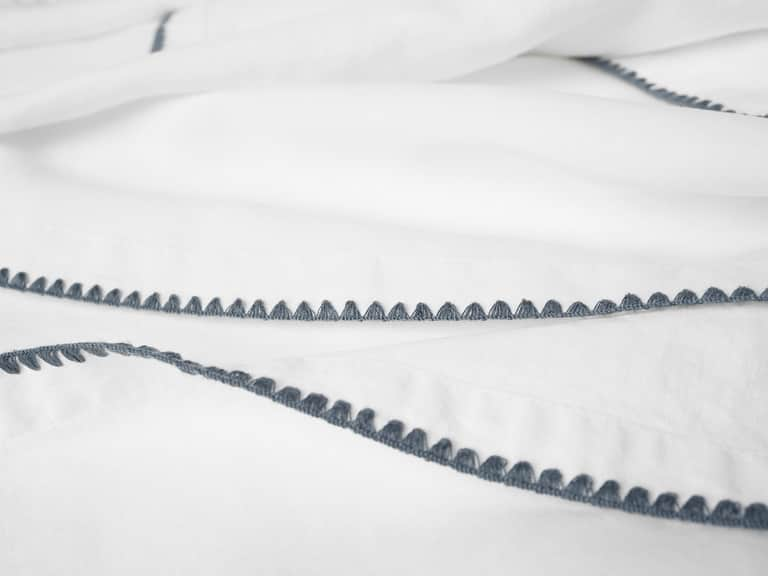
Naturepedic organic linen duvet covers offer a useful example of the details worth examining. Their listed construction includes 185-gram-per-square-meter GOTS-certified organic flax linen, a stone-washed finish, corner ties, and machine-wash care guidance. These are not universal standards for every duvet cover; they are practical specifications to compare against your own needs.
What a duvet cover does—and what it does not
A duvet cover is a removable textile shell for a duvet insert or comforter. It helps shield the insert from direct contact with skin and makes routine laundering more manageable: in most households, washing a cover is easier than washing a bulky insert. The cover also contributes color, texture, and visual weight to the bed, so it can change the room’s character without changing the mattress or the insert.
The cover itself does not provide the same insulation as a filled duvet. Warmth mainly comes from the insert, though the cover’s fiber and weave affect how air and moisture move near the body. A breathable fabric can feel less clammy for some sleepers, while a tightly woven or brushed surface may feel more enclosed or cozy. Comfort is personal, and room temperature, sleepwear, humidity, and the insert all play a part.
It is useful to separate these functions when comparing options. Ask what you need from the insert—loft, warmth, or weight—and what you want from the cover: a cool hand, an easy-care surface, a particular texture, or a specific look. Keeping those jobs distinct makes the specifications easier to interpret.
Fabric: begin with fiber, then consider weave
Fiber is the raw material; weave is the way yarns cross to form cloth. Both influence how a duvet cover feels and performs. A label that names only the fiber leaves questions unanswered about surface, density, and finishing. Conversely, words such as “percale” or “sateen” describe construction or appearance, not the fiber itself.
Linen and flax
Linen is made from flax fibers. Its surface often has visible texture, and its hand can feel crisp at first, then become more supple with use and laundering. The structure and finishing of a particular fabric matter: linen is not one identical material, and covers can vary in weight, softness, and drape.
Air circulation and moisture movement are often cited as reasons people consider linen for bedding, especially in warmer conditions. Yet no fabric can guarantee a cooler night on its own. The room, duvet insert, and individual sleep habits also affect temperature. Linen’s relaxed appearance may appeal to people who prefer a naturally textured bed rather than a sharply pressed surface.
The Naturepedic organic linen duvet cover is described as woven from certified organic flax grown in France and made in a GOTS-certified facility in India. Its 185 gsm fabric is stone-washed, and the product information notes that it can soften with repeated washing. The listed set includes a cover and two pillow shams, with corner ties intended to help secure the insert. When comparing similar covers, check the actual fiber content, fabric weight, origin information, certification details, and care label rather than assuming all linen behaves alike.
Cotton
Cotton is widely used in bedding and can be woven into fabrics with distinctly different surfaces. Percale is commonly associated with a crisp, matte feel; sateen tends to have a smoother surface and more visible sheen. Those are broad tendencies, not a promise of a particular level of softness. Yarn quality, finishing, weave density, and laundering all matter.
Long-staple cotton refers to fibers with relatively long lengths, which can be spun into smooth, strong yarns. Still, a fiber description alone cannot tell you whether a finished cover will feel cool, substantial, or especially soft. If you can, use fabric samples or read product specifications alongside care instructions and construction notes.
Blends and other fibers
Blended fabrics combine fibers to create a chosen balance of cost, hand, durability, or maintenance. The trade-off is that the fabric’s behavior may differ from that of either fiber used alone. Read the full composition and follow the care instructions for the finished textile; do not apply a linen or cotton routine automatically to a blend.
Synthetic fabrics can dry quickly and may be designed for straightforward upkeep, while natural-fiber covers can appeal to people who value the character and feel of plant-based textiles. Neither category is universally superior. Consider what matters most in your room: texture, care frequency, temperature preference, fiber sourcing, or how the fabric changes with use.
How to read fabric claims thoughtfully
Product descriptions can contain useful clues, but specifications are most helpful when interpreted precisely. “Organic” describes a claim about fiber production or processing that should be supported by a clearly identified certification. “Stone-washed” describes a finishing process intended to alter the fabric’s hand or appearance; it does not, by itself, establish how long the textile will last. “Breathable” is a helpful general description, but it does not replace practical details about weave, weight, and care.
For a certified textile, check what the certification covers and whether the specific product is included. GOTS, or the Global Organic Textile Standard, is a standard associated with organic textile processing and related criteria. A product’s certification statement is more informative when it identifies the standard and the certified scope rather than relying on a broad sustainability phrase.
Also notice whether a description explains where the fiber was grown, where the fabric was woven, and where the finished item was made. These are separate points in a supply chain. They may help you understand the product, but country-of-origin details alone do not establish quality or environmental impact.
Fit: match the cover to the insert
A well-fitting duvet cover gives the insert room to loft without leaving excess fabric that bunches or folds around it. Before choosing a size, check the measurements of both the cover and the insert. A size label such as “Full/Queen” or “King/California King” may group several mattress or bedding conventions together; it is not a substitute for dimensions.
Measure the insert when it is laid flat, without compressing the fill. Compare its length and width with the cover’s stated dimensions, and consider the shape of the corners. A small difference may be workable, but an insert that is substantially smaller can drift inside the shell, while one that is too large may compress and lose some of its loft. If the manufacturer provides guidance for insert compatibility, use it as a starting point.
Also account for how you like a bed to look. A cover that fits close to the insert can create a neat, defined silhouette; a slightly more generous cover may produce a looser drape. Do not assume that sizing up will always create a better result: too much room can make it harder to keep the fill evenly distributed.
Check ties, buttons, zippers, and openings
Closure details have everyday consequences. Interior corner ties or loops can connect with corresponding ties on an insert and help limit movement. They will not remove every crease or shift, but they can make the cover easier to keep orderly. Before buying, check how many ties are included, where they are placed, and whether your insert has compatible loops.
Buttons, snaps, and zippers each create a different closure. Buttons are familiar and easy to inspect, while a zipper can close a longer opening more quickly. A flap or overlap may conceal the closure, though it can take a little more attention when inserting the duvet. Examine the finishing around the opening: secure stitching and cleanly finished edges help the closure withstand repeated handling.
Ask yourself a practical question: will the closure be simple to fasten while the insert is inside, and is it likely to remain closed during sleep? There is no single best option for every household. Ease of laundering, household preferences, and the design of the insert all influence what works.
Everyday care: preserve the fabric, not just its appearance
Care begins with the label attached to the cover. Washing advice varies by fiber, dye, weave, finish, and construction, so a general rule is no substitute for instructions written for the specific textile. The Naturepedic organic linen duvet cover listing recommends machine washing warm, tumble drying low, warm ironing if desired, and avoiding bleach. Other linen products may specify cold water or a different cycle. Follow the label on your own cover.
Before washing, close fasteners and turn the cover inside out if the care directions allow. This can reduce friction on visible surfaces and help prevent a closure from catching on other items. Wash bedding with similar colors and avoid packing the machine tightly: fabric needs room to move through water and rinse clean. Overloading can leave detergent behind or increase tangling.
Use the recommended amount of detergent. More is not necessarily better; excess product may be difficult to rinse out and can leave buildup in the fibers. Avoid chlorine bleach unless the label explicitly permits it. Fabric softener is also not a universal solution: some manufacturers advise against it because it can affect a textile’s surface or performance.
Choose the temperature and cycle specified by the care label. A gentle cycle can reduce mechanical stress, but the right setting depends on the instructions and the condition of the cover. For drying, low heat or line drying may help limit unnecessary exposure to high temperatures. Remove the cover promptly when dry or slightly damp, according to its care directions, and avoid leaving it in a hot dryer for longer than needed.
If ironing is recommended, use the stated setting and test an inconspicuous area when uncertain. Linen’s natural texture is often part of its appeal; ironing is optional unless a smoother appearance matters to you. Store a clean, fully dry cover in a dry, ventilated place, away from direct sunlight and damp areas.
A simple routine for keeping a duvet cover fresh
How often to wash bedding depends on use, climate, and personal preference. A consistent routine can keep the cover fresh without putting it through unnecessary cycles. If someone in the household has specific allergy or skin-care guidance, follow the advice of a qualified health professional alongside the textile label.
- Air the bed: Pull back the cover briefly after waking so trapped warmth and moisture can disperse before making the bed.
- Spot-check promptly: Blot spills rather than rubbing them deeper into the fabric, and consult the care label before applying a stain treatment.
- Wash thoughtfully: Close the cover, sort by color, leave room in the machine, and use an appropriate detergent amount.
- Dry with restraint: Follow the label, avoid excessive heat, and make sure the cover is fully dry before folding or storing it.
- Inspect seams and closures: A loose button, fraying tie, or open seam is easier to address before it becomes a larger repair.
When putting the cover back on, turn it inside out and reach inside to grasp the two far corners. Hold those corners together with the corresponding corners of the insert, then roll or shake the cover down over the fill. Fasten the ties and closure, and give the duvet a few gentle shakes to distribute the insert. This method can make a bulky task more manageable, especially with larger sizes.
A comparison checklist before you choose
Instead of looking for a single “best” duvet cover, compare the details that connect directly to your daily routine. A quick review can help reveal whether a description offers the information you need:
- Fiber content: Is the cover linen, cotton, a blend, or another textile? Is the composition stated clearly?
- Weave and finish: Is the fabric described as percale, sateen, plain weave, stone-washed, or another construction or finish?
- Dimensions: Are the cover measurements listed, and do they suit the actual dimensions of your insert?
- Fastening: Does it have ties, loops, buttons, snaps, or a zipper? Will those features work with your insert?
- Set contents: Does the listing include only the cover, or are pillow shams included? Check the stated quantities and sizes.
- Care: What water temperature, cycle, drying method, and restrictions does the manufacturer specify?
- Certifications and sourcing: Are claims specific and verifiable, and do they explain what the certification applies to?
Small details, lasting comfort
A duvet cover is a textile you encounter every day, often in the quietest hours of the morning and evening. Its value lies in the way it brings together practical protection and familiar comfort: a surface that feels right against the skin, dimensions that accommodate the insert, fasteners that hold, and care instructions you can realistically follow.
Natural linen, including the certified organic example from Naturepedic, may appeal to sleepers who enjoy a textured, breathable fabric and do not mind a relaxed finish. Cotton offers a broad range of weaves and surface feels, while blends and other fibers present different combinations of hand and maintenance. In each case, the useful comparison is not a headline claim but the full set of details: fiber, construction, finish, fit, closure, and label-directed care.
When those details align with your room and routine, a duvet cover becomes more than a decorative layer. It becomes an everyday part of a well-kept bed—easy to remove, straightforward to wash, and comfortable to return to night after night.
Frequently asked questions
Should a duvet cover be the same size as the insert?
Compare the actual measurements rather than relying only on size names. A cover close to the insert’s dimensions generally helps limit excess fabric, but the manufacturer’s fit guidance and the insert’s loft also matter.
Do linen duvet covers always feel cool?
No fabric guarantees a particular temperature for every sleeper. Linen’s structure is often valued for airflow and moisture management, but room conditions, the duvet insert, and personal preferences also affect comfort.
Can I wash every linen duvet cover in warm water?
No. Care instructions vary by product, finish, and construction. Follow the label on the specific cover; one linen item may call for warm water while another recommends a cold, gentle wash.
What do corner ties do?
Corner ties attach the cover to compatible loops on the duvet insert, helping reduce movement inside the shell. They do not guarantee that the insert will never shift, but they can make it easier to keep the fill in place.